
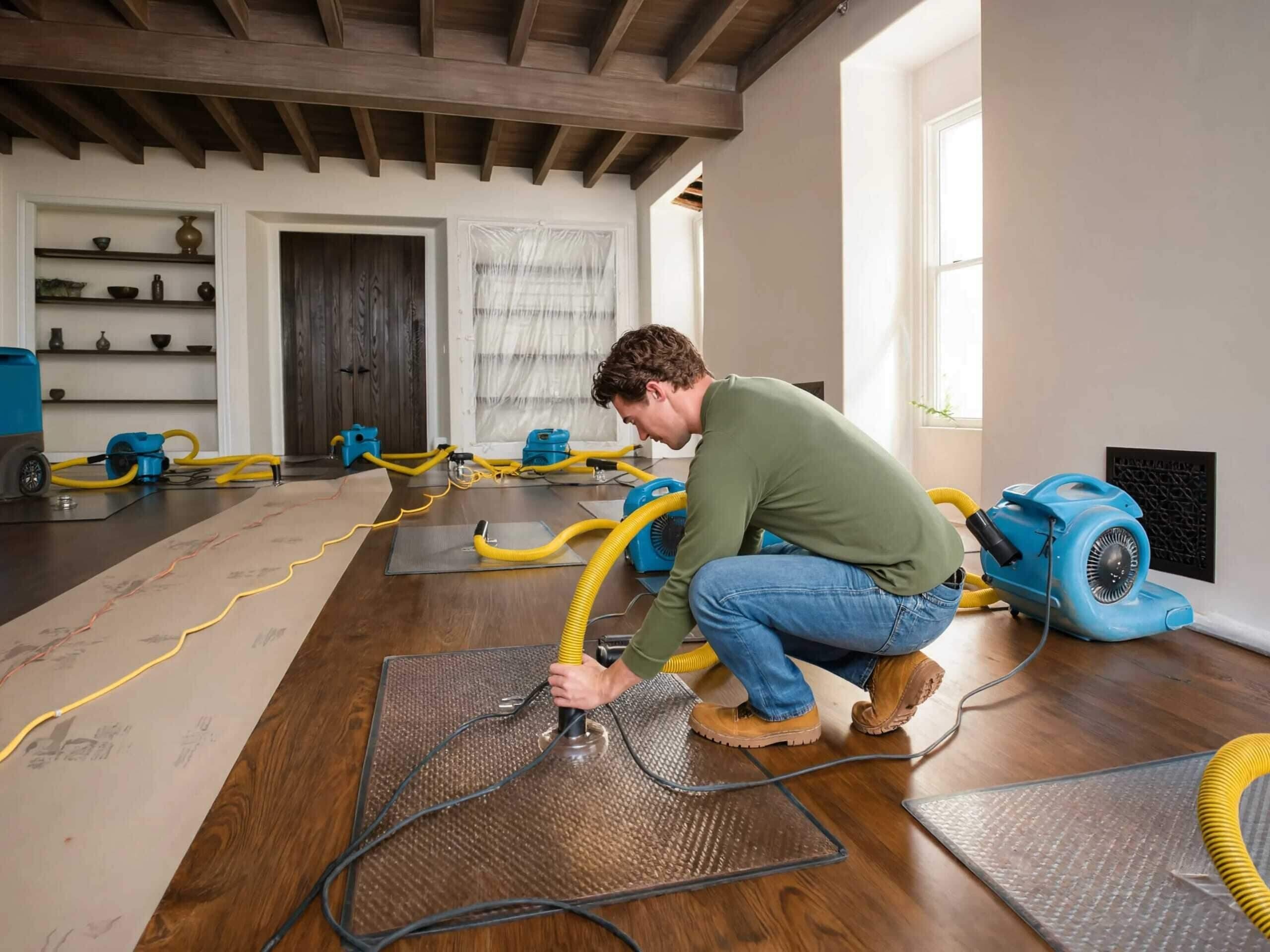
Roof Water Damage Repair in Houston, TX
Water tracking down from the attic after a heavy Houston rain spreads fast and quiet. Our IICRC-certified crew stops the active leak, dries the attic and ceilings before mold sets in, and restores the interior. day or night.
Call Now to Prevent Further Damage
Call Now(346) 210-6101
24/7 Emergency Response
Certified & Accredited in Houston


What You Get When You Call Houston Water Damage Restoration Pros
Real Houston crews, not a call center. Most neighborhoods reached within hours.
Trained to manufacturer and insurer standards, documented from the first hour.
We work with your adjuster and handle the claim paperwork for you.
Mitigation and full restoration under one roof, no handoff gaps or delays.
How Roof Leaks Damage Your Houston Home
A roof leak rarely drips straight down. Water enters at a worn spot, runs along the decking and rafters, and soaks materials far from the entry point before it ever stains a ceiling. By the time you see it inside, the attic has usually been wet for a while. Houston's wind-driven thunderstorms and long rainy stretches are what push water past roofing that holds up fine in a light shower.
- Attic first, ceiling later. Rain gets in through lifted shingles, failed flashing around vents and chimneys, or a backed-up valley, then pools on the attic floor and insulation before bleeding through the drywall below.
- Soaked insulation. Wet blown-in or batt insulation mats down, loses its R-value, and holds moisture against the ceiling for weeks — a steady source of mold and a recurring stain.
- Wood rot in the framing. Rafters, decking, and trusses that stay damp in Houston's humidity warp and rot along the grain, weakening the structure that holds the roof up.
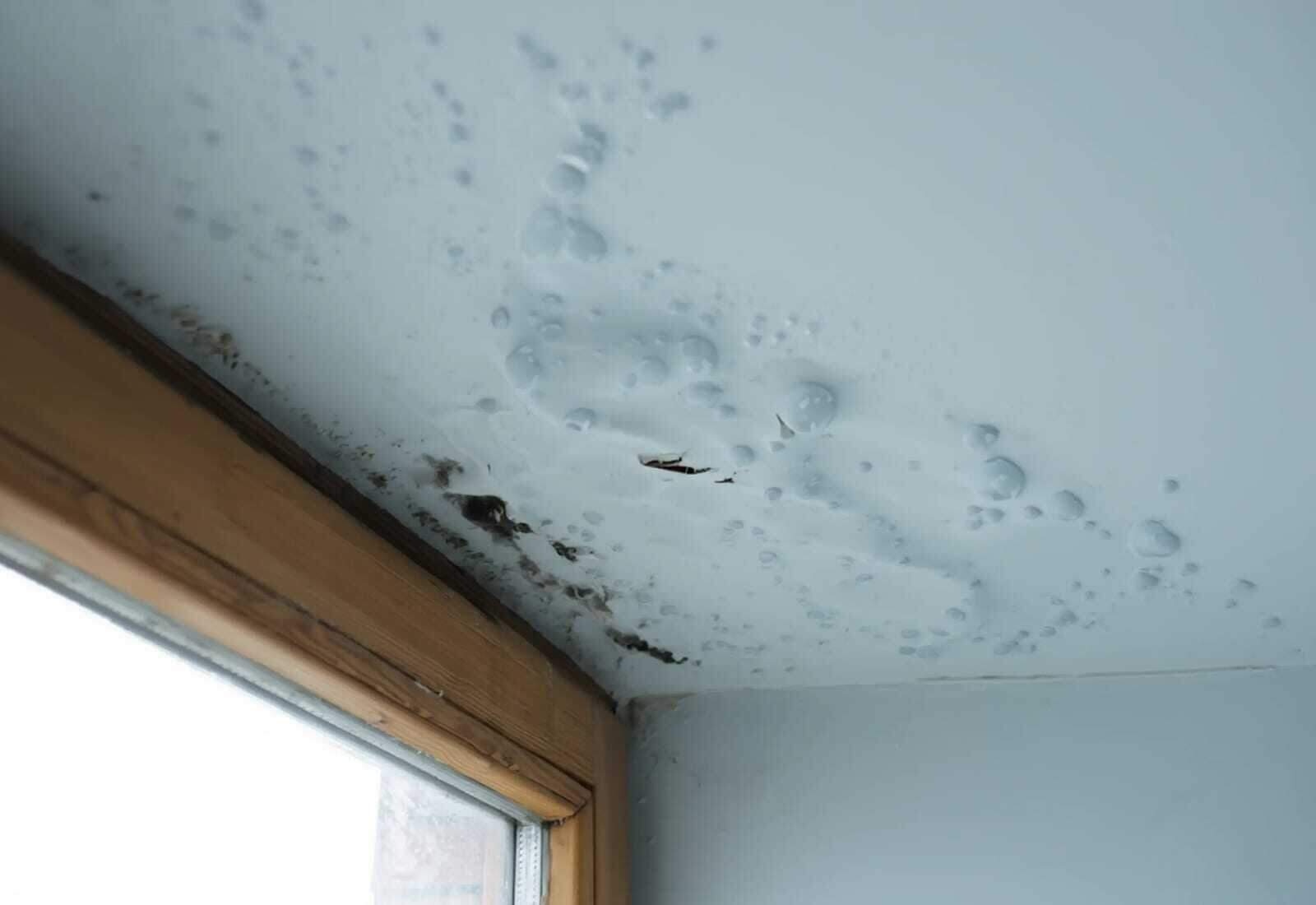
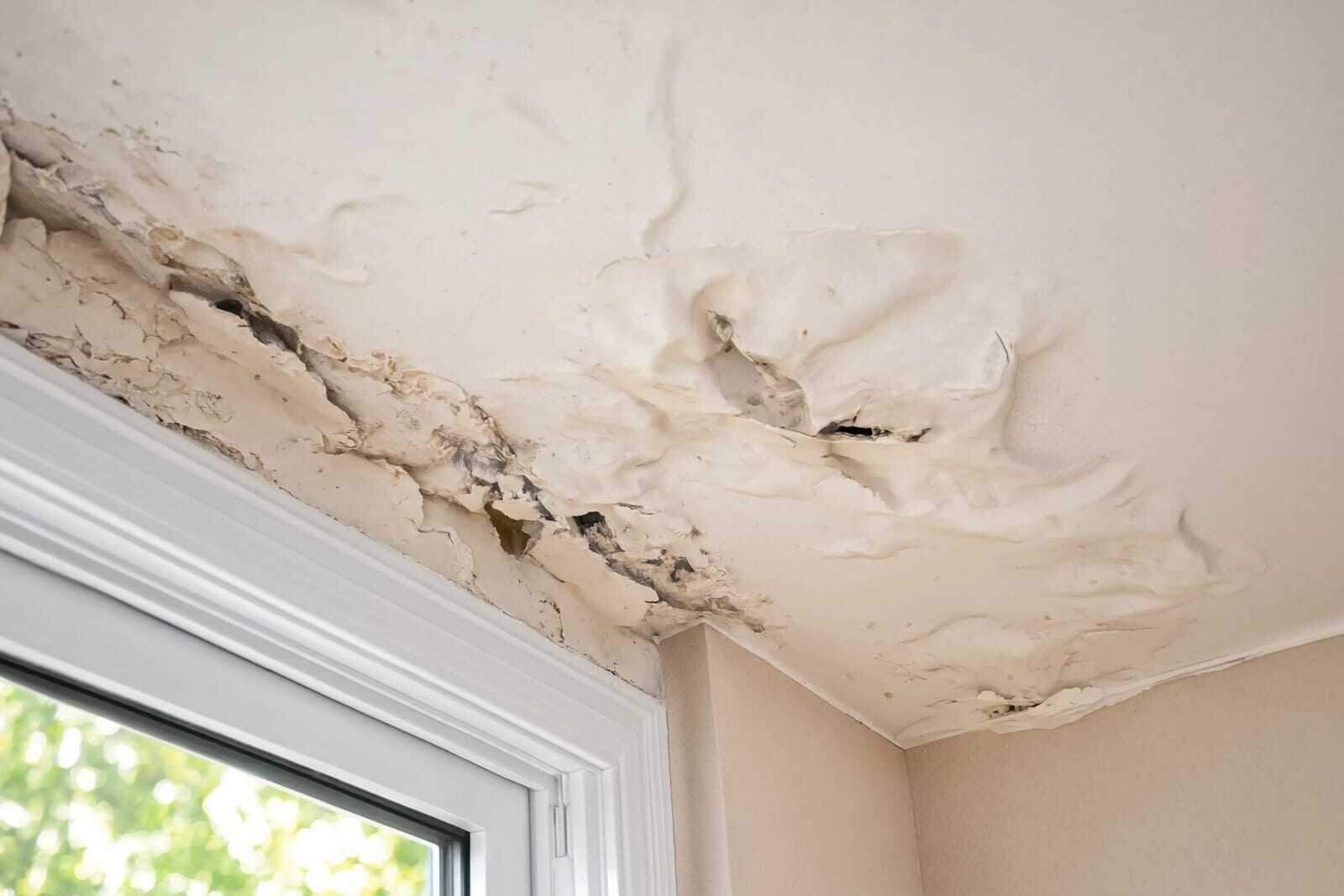
- Ceiling and wall staining. Water travels to the low point and shows up as a brown ring, a sag, or peeling paint — often a room away from the actual roof breach. Those overlap with ceiling water damage.
What Our Roof Water Damage Service Covers
We're the water-damage side of a roof leak — we stop it, dry it, and restore the inside. Here's what comes with a roof-leak call in Houston.
Emergency Roof Tarping
We tarp and dry-in the breach so rain stops entering while permanent roofing is arranged — the leak stops the same visit.
Attic & Insulation Drying
Soaked insulation comes out, and air movers dry the decking and rafters until the attic reads dry on a meter.
Ceiling & Wall Restoration
Stained, sagging drywall is dried or replaced and refinished, so the only sign left is a clean ceiling.
Mold Checks
Where the attic sat wet, we test for mold on the framing and insulation before anything gets closed back up.
Our Roof Water Damage Process
The order matters: stop the water, then dry the structure, then restore. Skipping the drying step is how a roof leak turns into a mold job. This is how our Houston crew runs it.
Stop the Water
We locate the breach and tarp or dry-in the roof so rain stops getting into the attic immediately.
Map the Moisture
Meters and a thermal camera trace how far water spread through the attic, insulation, and ceiling.
Remove the Wet
Saturated insulation and unsalvageable drywall come out so the framing underneath can dry.
Dry the Structure
Air movers and dehumidifiers run on the attic and ceilings to the IICRC dry standard, verified daily.
Restore the Interior
We replace insulation, rebuild and repaint ceilings, and document it all for your claim.
For the roofing repair itself, we coordinate with a licensed roofer so the permanent fix and the interior restoration line up. Everything is photographed and logged for your water damage insurance claim.
Attic, Insulation & Ceiling Drying
The attic is where a roof leak does its quiet damage, and it's the part most cleanups skip. Drying a Houston attic properly takes more than opening a vent — the humidity outside is often higher than inside, so fans alone push wet air around without removing moisture. Here's what proper attic drying involves.
- Insulation assessment. Lightly damp batts can sometimes dry in place; matted, soaked, or contaminated insulation comes out, because wet insulation holds water against the ceiling and never fully recovers its R-value.
- Sealed-system drying. We use dehumidifiers to pull moisture out of the attic air rather than relying on outside ventilation, which in Houston's climate often makes a wet attic worse.
- Framing moisture readings. Rafters and decking are metered until they hit a dry target, not just until they feel dry to the touch — wood can read wet inches deep while the surface is dry.
- Ceiling drying from above and below. We dry the back of the drywall in the cavity as well as the room side, so the ceiling dries through instead of trapping moisture in the middle.
If the attic was wet long enough for growth to start, our mold removal team handles the framing and insulation before the space is rebuilt. Found a fresh stain after a storm? Get in touch and we'll check the attic above it.
Frequently Asked Questions
What should I do about water coming through the ceiling during heavy rain?
Put a bucket under the drip and a tarp or plastic over anything below it, then poke a small hole in the center of any bulging, water-filled ceiling area to let it drain in one spot instead of bursting across the room — do that only if you can reach it safely. Move furniture and electronics clear, and call us. We can tarp the roof in the rain to stop more water from entering and start drying the attic and ceiling the same visit. Don't climb onto a wet roof yourself.
Do you repair the roof itself or the interior water damage?
We handle the water damage — emergency tarping to stop the leak, drying the attic and insulation, and restoring stained or sagging ceilings and walls. For the permanent roof repair or replacement we coordinate with a licensed roofer so the two halves line up. Our focus is making sure the water that already got in is fully dried and the interior is restored, which is the part that turns into mold and structural damage if it's missed.
How fast can you respond to a roof leak in Houston?
We answer 24/7 and reach most of the Houston metro within a few hours from our base on Spring St in the Washington Avenue corridor. During a storm, when leaks come in across the city at once, we still dispatch in call order and tarp to stop active water first. The sooner we get the attic drying, the less insulation and ceiling you lose, so call as soon as the water shows up rather than waiting for the rain to pass.
Is roof leak damage covered by homeowners insurance?
Sudden roof damage from a storm — wind-lifted shingles, a fallen limb through the roof — is usually covered, and so is the resulting interior water damage. Leaks from a roof that was already worn out or poorly maintained are often denied as a maintenance issue. It depends on your policy and the cause. We document the source, the entry point, and the interior damage with photos and moisture readings so your adjuster has a clear record of what happened and when.
Roof Leaking Into Your Home? Call Now.
Every hour a roof leak runs, more insulation mats down and more ceiling soaks through. Our Houston crew is on call 24/7 to tarp the roof, dry the attic, and restore the inside — call now and we'll head your way.
Call Now: (346) 210-6101