
Water Damage Insurance Claims Help in Houston, TX
A water loss is stressful enough without fighting the paperwork. We handle the part most homeowners dread — the photos, the moisture logs, the line-item documentation an adjuster needs — and we bill your carrier directly. Here's how a water damage claim actually works in Texas, and where we fit in. Call (346) 210-6101.
How Water Damage Insurance Claims Work in Texas
A water damage claim runs on a clock and on evidence. The two things that decide how it goes are how fast you act and how well the loss is documented — and both start the moment the water shows up.
In practice, a Houston homeowner's claim usually moves through the same sequence. You stop the source and call your insurer to open the claim. A mitigation crew gets the water out and the structure drying so the damage stops growing. Your carrier assigns an adjuster, who reviews the documentation and the scope of work. The mitigation invoice and any rebuild estimate get submitted, and the carrier pays out, minus your deductible.
One point trips people up: most policies require you to take "reasonable steps" to prevent further damage after a loss. That isn't optional. If a pipe bursts and you leave the water sitting for a week, an insurer can deny the part of the damage that drying would have prevented. Calling a mitigation crew quickly isn't just about saving your floors — it protects the claim itself. Houston Water Damage Restoration Pros documents the loss from the first visit so there's a clear record that the home was dried to standard.
Texas also gives homeowners specific protections. The Texas Department of Insurance (TDI) sets deadlines insurers must follow once a claim is filed and runs a consumer help line if a claim stalls. We're a restoration contractor, not your adjuster or attorney — but knowing TDI exists is worth it if your carrier goes quiet.
Documenting the Damage the Right Way
An adjuster pays on what can be proven, not on what you describe over the phone. Strong documentation is the single biggest factor in whether a claim is paid in full or trimmed down.
Before anyone starts moving or tearing out wet materials, capture the loss as you found it:
- Wide and close photos of every affected room — floors, walls, ceilings, and the contents in them. Shoot before mitigation starts, because once the carpet pad is pulled, that evidence is gone.
- The source of the loss. A photo of the burst supply line, the failed water heater, or the overflowing dishwasher ties the damage to a specific sudden event — which is what most policies cover.
- A simple inventory of damaged belongings with rough age and value. Furniture, electronics, flooring, and drywall all count.
- Receipts for anything you spend mitigating the loss — a wet-vac, fans, a plumber's emergency call, a hotel night if the home is unlivable.
- Moisture readings and drying logs. This is the part homeowners can't produce on their own, and it's exactly what we provide.
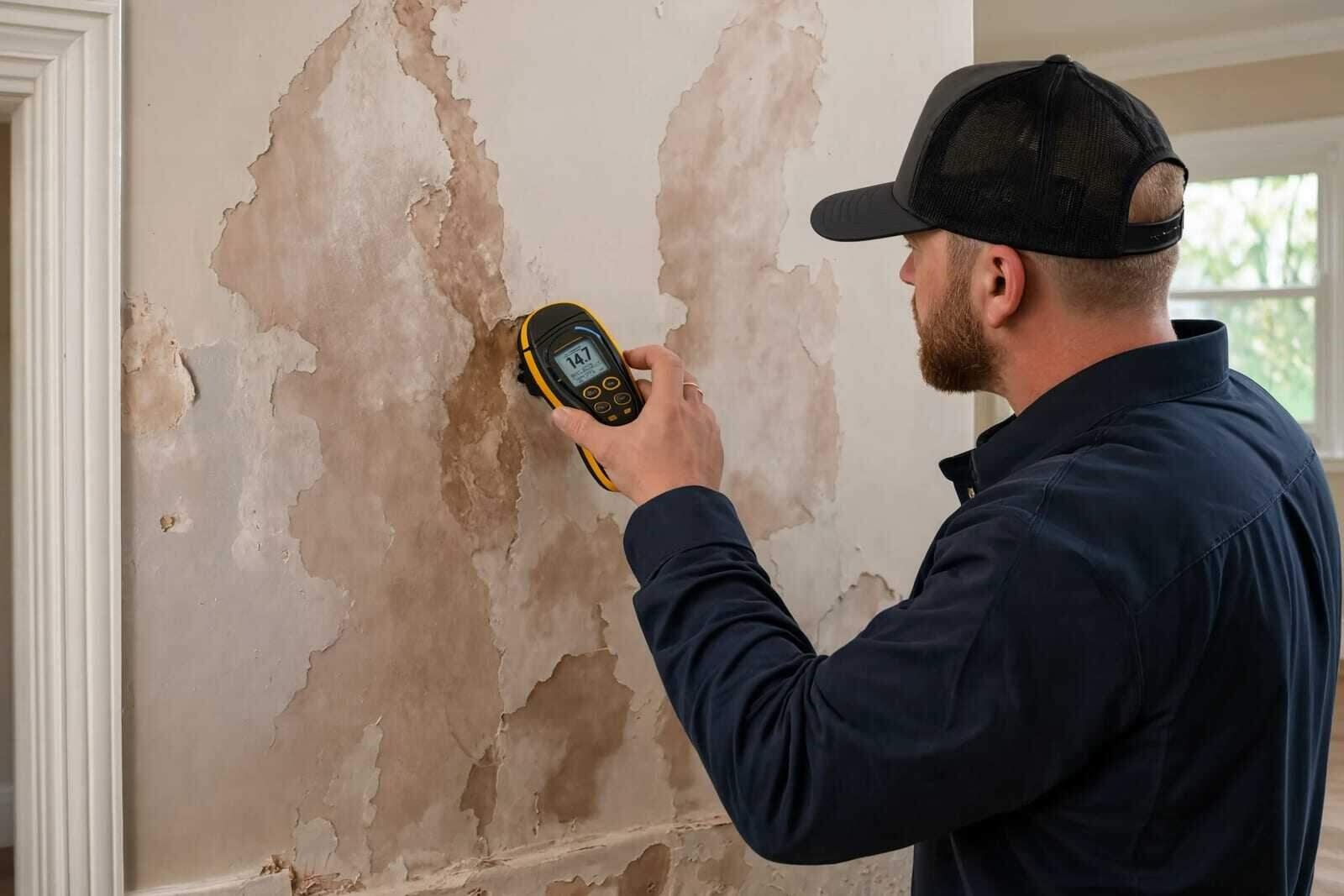
When we run a job, every affected area gets metered with moisture meters and scanned with thermal cameras, and those readings are logged daily until the structure hits the IICRC S500 dry standard. That paper trail — timestamped photos, a written scope, and drying data — is the documentation package adjusters are trained to approve. It's also the difference between a smooth claim and a back-and-forth over what was really wet.
What Homeowners Insurance Typically Covers (and Doesn't) in Texas
The dividing line on most Texas homeowners policies is sudden and accidental versus gradual and preventable. Coverage usually turns on which side of that line your loss falls.
Typically covered — sudden, accidental water damage from inside the home:
- A burst or failed supply pipe
- A water heater, washing machine, dishwasher, or refrigerator line that fails
- An overflow from a tub, sink, or toilet
- A sudden roof leak from storm-driven damage (the resulting interior water damage)
- A sewer or drain backup — but usually only if you carry the optional backup endorsement, which many Houston policies don't include by default
Typically not covered — gradual damage, neglect, or excluded perils:
- A slow leak under a sink that dripped for months — insurers read this as a maintenance failure
- Mold that grew because a known leak went unaddressed
- Damage from deferred maintenance on old plumbing or a worn roof
- Flooding from outside — rising water, bayou or river overflow, storm surge, and hurricane flooding. This is a real distinction in Houston: that kind of flood damage falls under separate flood insurance (often through the NFIP), not your standard homeowners policy. We restore water damage from interior plumbing and appliance failures; we don't handle storm-surge or rising-water flood losses.
Policies vary, and your declarations page is the only thing that says for certain what you carry. If you're unsure whether a loss qualifies, the fastest answer is to call your insurer and open the claim — they decide coverage, not us. What we can tell you on the phone is whether the damage looks like the kind that's usually covered, and we'll document it either way.
Working With Your Adjuster
The adjuster is the person who approves your claim, so making their job easy works in your favor. A well-documented loss with a clear scope of work moves faster than one they have to chase down.
A few things keep the process clean. Open your claim promptly and write down the claim number and your adjuster's contact. Don't throw out damaged materials until they've been photographed and, where possible, until the adjuster has seen them or you've cleared it with your carrier. Keep your own copy of every estimate and invoice. And you're allowed to get the structure dried before the adjuster physically arrives — in fact, you're expected to mitigate quickly, which is why our drying logs matter so much. They show the adjuster exactly what was wet and what we did about it, even for materials that were already dry by the time they walked in.
We talk to adjusters on water losses regularly and provide our documentation in the format they ask for. If your adjuster needs a moisture map, a photo set, or a written drying summary, we send it. You stay in control of the claim; we just make sure the evidence backs you up.
How We Bill Your Insurance Directly
You don't have to float the mitigation bill and wait to be reimbursed. On covered losses, Houston Water Damage Restoration Pros bills your insurance carrier directly, so most homeowners pay only their deductible out of pocket.
The way it works is straightforward. Once your claim is open, you give us the claim number and adjuster contact, and we coordinate the mitigation invoice with your carrier. We document the job to the standard adjusters expect, submit the paperwork, and work with the insurer on payment for the covered portion of the work. Your deductible is yours to pay — that part doesn't change — but the back-and-forth over the invoice is ours to handle.
Direct billing depends on your policy and your carrier's approval of the claim, so we'll be straight with you about what's covered and what isn't before work starts. For a sense of what the underlying restoration runs and what affects the figure, see our breakdown of water damage restoration cost in Houston. To get a crew out and the documentation started, contact us any time, day or night.
Frequently Asked Questions
Is sudden water damage covered but gradual damage isn't?
That's the usual split on Texas homeowners policies. A sudden, accidental event — a pipe that bursts, an appliance line that fails, a tub that overflows — is typically covered. Damage that built up slowly, like a sink that dripped unnoticed for months or mold from a leak you knew about and didn't fix, is usually read as a maintenance issue and denied. Your declarations page and your adjuster make the final call. We document the loss so the cause is clear either way, which is exactly what supports a sudden-event claim.
What documentation do I need for my water damage claim?
Photos of every affected area taken before anything is moved or torn out, a photo of the source of the water, a simple inventory of damaged belongings, and receipts for anything you spend mitigating the loss. The piece homeowners can't produce themselves is moisture data — readings and daily drying logs proving the structure was dried to standard. We capture that on every job and hand it over in the format adjusters expect, so your claim is backed by timestamped evidence rather than a description.
Can you bill my insurance company directly?
Yes. On covered losses we bill your carrier directly for the mitigation work, so most homeowners pay only their deductible out of pocket. Give us your claim number and adjuster contact once the claim is open, and we coordinate the invoice and documentation with your insurer. Direct billing depends on your policy and the carrier approving the claim, so we'll tell you up front what's covered before we start.
What if my claim is denied or underpaid?
Thorough documentation is your best protection against both, which is why we photograph and meter everything from the first visit. We're a restoration contractor, not your adjuster or an attorney, so we can't decide coverage or dispute it for you. But if your carrier underpays or stalls, our drying logs and photo set give you a concrete record to point to, and the Texas Department of Insurance runs a consumer help line for homeowners whose claims aren't being handled within the deadlines Texas requires.
Water Loss Right Now? We'll Document It From the First Visit.
The sooner we're on site, the stronger your claim and the less your home loses. Our Houston crew is on call 24/7 — we dry the structure, log every reading, and bill your insurer directly on covered losses.
Call Now: (346) 210-6101