
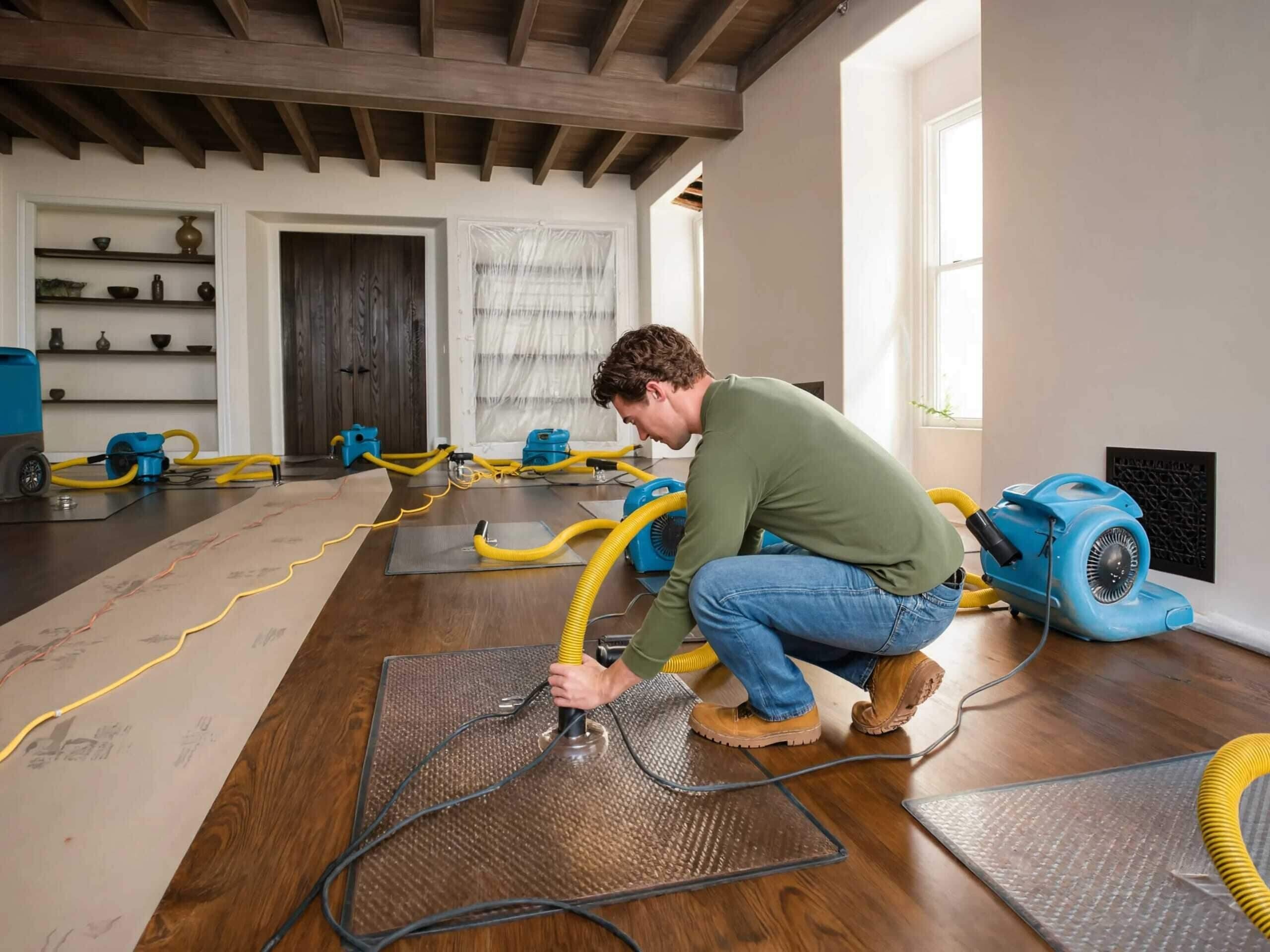
Mold Removal & Remediation in Houston, TX
Musty smell, dark patches on the drywall, or mold spreading after a leak? Houston's humidity makes it grow fast. Our IICRC-certified crew finds the moisture feeding it, seals the area off, and removes the mold for good — not just wipes the surface.
Call Now to Prevent Further Damage
Call Now(346) 210-6101
24/7 Emergency Response
Certified & Accredited in Houston


What You Get When You Call Houston Water Damage Restoration Pros
Real Houston crews, not a call center. Most neighborhoods reached within hours.
Trained to manufacturer and insurer standards, documented from the first hour.
We work with your adjuster and handle the claim paperwork for you.
Mitigation and full restoration under one roof, no handoff gaps or delays.
Why Houston's Humidity Accelerates Mold Growth
Mold needs moisture, and Houston supplies it nearly year-round. The city sits above 70% relative humidity most of the year, so a water leak that might dry harmlessly in a desert climate keeps feeding mold here. Spores are always in the air; give them a damp baseboard, a leaking AC closet, or a wall that never fully dried, and a colony takes hold in a day or two. That short timeline is exactly why surface-level cleaning fails in Houston: wipe the visible spots and the moisture source keeps growing more behind the drywall. We treat mold as a moisture problem first, so until the water source is under control, anything we scrub off comes back. That's the difference between remediation and bleaching a wall.
When Water Damage Leads to Mold
Most of the mold we remediate in Houston homes traces back to water that was never fully dried. These are the usual culprits.
- A leak that dried on its own. A slow supply-line drip or roof leak that no one extracted leaves the framing damp long enough for mold to start, often hidden inside the wall.
- Flooding that wasn't dried to standard. Floors that felt dry on top but held moisture in the subfloor and pad are a common source — surface-dry is not structure-dry.
- AC condensation and sweating ductwork. Air handlers in closets and attics drip onto drywall and insulation all summer, and the resulting mold is one of the most common calls we run.
- High indoor humidity. Homes kept warm and closed up in a Houston summer can grow surface mold on closet walls and around windows with no leak at all.
- Bathrooms with poor ventilation. Showers without a working exhaust fan keep grout, caulk, and the wall behind the tile damp enough to grow mold.
If you've recently had a leak or flood, the way to avoid this is fast water removal and proper structural drying before mold gets the chance.
Mold Inspection & Testing
Before we remove anything, we find out how far it goes. The mold on a visible wall is often the small part, with the colony extending into the cavity, subfloor, or HVAC. Our inspection maps the full extent so the scope is right.
Moisture Mapping
Pin meters and infrared cameras trace the damp areas feeding the mold, behind walls and under floors.
Air & Surface Sampling
When the situation calls for it, we collect air and tape samples to lab-confirm spore type and level.
Scope & Written Plan
You get a clear scope of what's affected, what comes out, and what stays before any work starts.
Post-Removal Verification
After remediation we re-check and, where tested, re-sample to confirm spore levels are normal again.
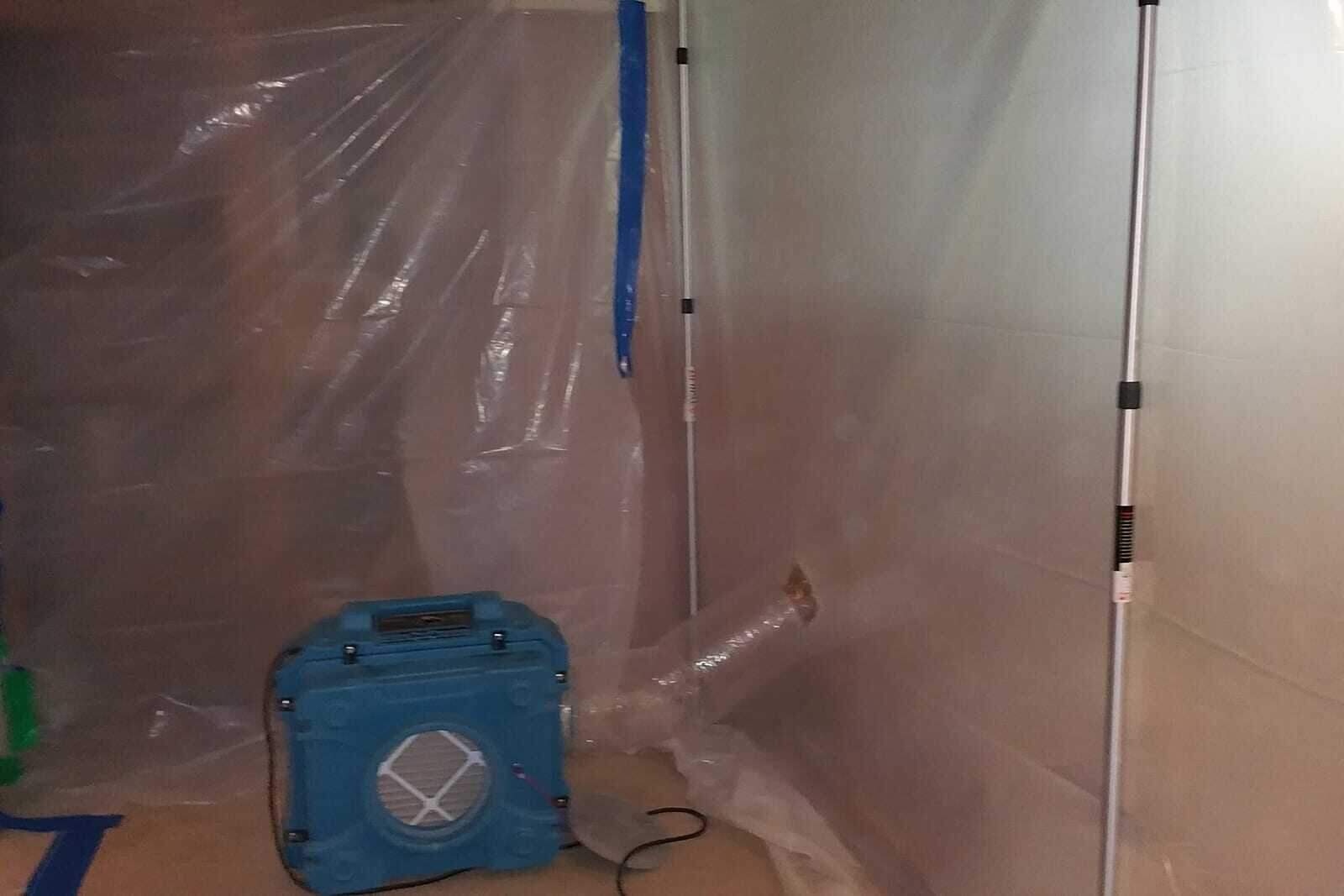
Our Mold Containment & Removal Process
Mold spreads by spores, so the whole job is built around not releasing them into the rest of your home. We work the IICRC S520 standard from containment through clearance.
Seal Off the Area
Plastic barriers and negative air pressure contain the work zone so spores can't migrate to clean rooms.
Scrub the Air
HEPA air scrubbers run throughout the job, capturing airborne spores as we work.
Remove Affected Materials
Mold-laden drywall, insulation, and trim are cut out and bagged inside the containment, then hauled off.
Clean & Treat
Salvageable framing and surfaces are HEPA-vacuumed and treated with an EPA-registered antimicrobial.
Dry & Control Moisture
We dry the cavity and correct the moisture source so the same spot doesn't grow mold again.
Verify & Rebuild
We confirm the area is clean, then put back drywall, trim, and finishes to match.
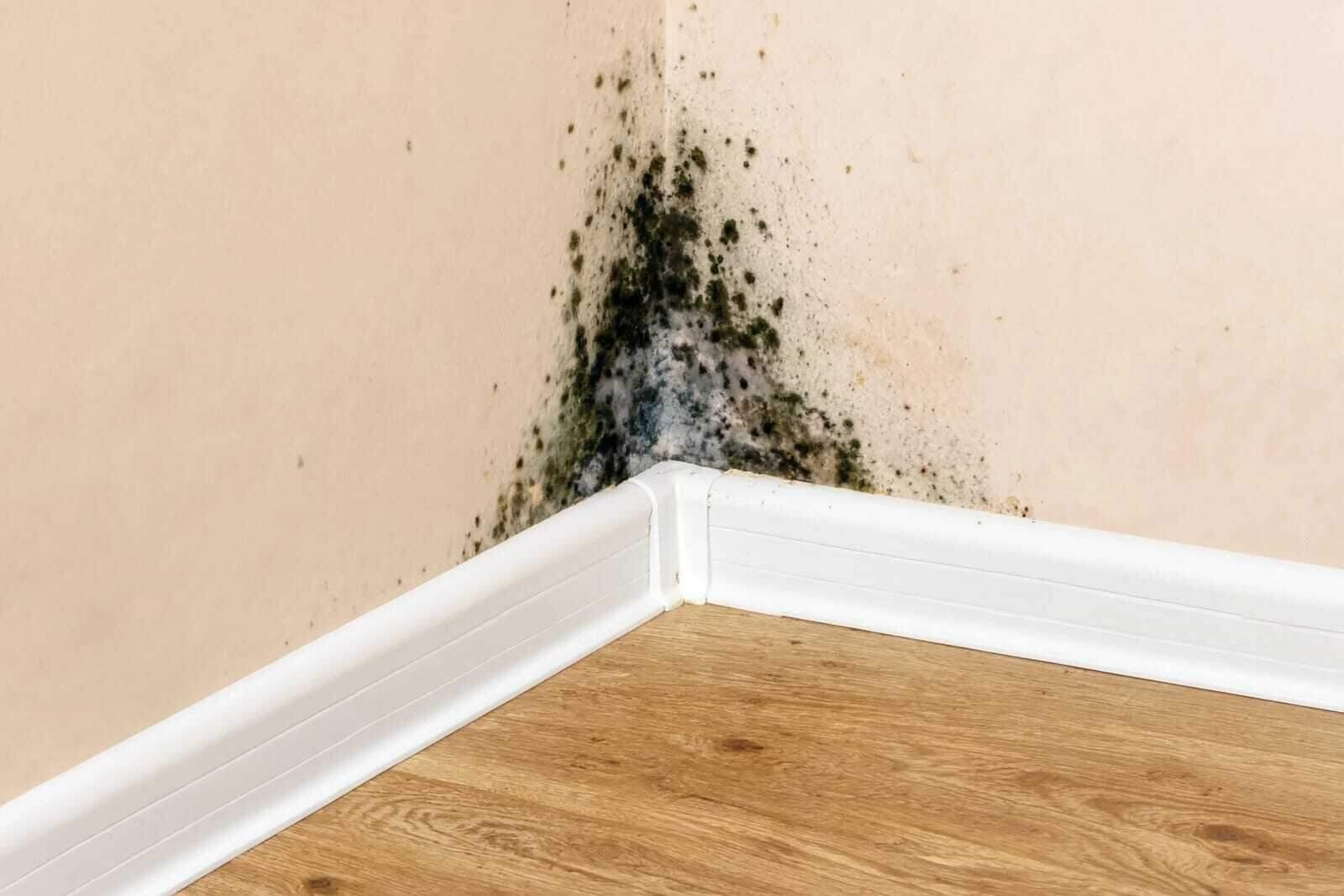
Black Mold: Risks and Safe Removal
"Black mold" usually refers to Stachybotrys chartarum, a greenish-black mold that grows on chronically wet drywall and ceiling tile, which is exactly what Houston's humidity and slow leaks produce. It's not the only mold worth taking seriously, but it's the one homeowners ask about, and it warrants care.
The health concern isn't a reason to tear it out yourself; disturbing it without containment spreads spores through the house. Our crews handle suspected black mold the same controlled way every time:
- Full containment and PPE. The area is sealed under negative pressure and our technicians work in respirators and protective suits.
- No dry disturbance. Affected material is misted and removed wet so spores stay down instead of going airborne.
- Source correction. Because Stachybotrys needs steady moisture, we fix the water source as part of the job, not as an afterthought.
Preventing Mold After Water Damage in Houston
The surest way to never need mold removal is to dry water damage completely the first time, which in a humid climate takes equipment and monitoring, not open windows and a box fan. A few things keep Houston homes ahead of mold:
Dry within 24 to 48 hours
That's the window before mold typically starts. Fast water removal and structural drying after any leak is the single biggest factor in avoiding remediation.
Keep indoor humidity in check
Running AC and exhaust fans, and holding indoor humidity below about 50%, takes away the moisture surface mold needs to start on walls and in closets.
Watch the AC closet and attic
Condensation drips and clogged drain lines are a top Houston mold source. A dry pan and clear line keep the air handler from feeding mold all summer.
Don't ignore a musty smell
A musty odor with no visible mold usually means it's growing out of sight. Catching it early keeps a small job from becoming a wall tear-out.
If the mold followed a covered event like a burst pipe, your homeowner's policy may cover the remediation. We document the cause and handle the paperwork; see how we manage water damage insurance claims, or contact us with your situation.
Frequently Asked Questions
How soon does mold grow after water damage in Houston's climate?
Generally within 24 to 48 hours of materials staying wet — and Houston's high humidity sits at the fast end of that range. Because the air here rarely dries materials out on its own, water that isn't actively extracted and dried tends to grow mold rather than evaporate. That's why we treat a fresh leak as a drying emergency: get the moisture out in the first day or two and you usually skip mold entirely.
Do you test for mold before removal?
We always inspect with moisture meters and infrared to map how far the mold and the moisture feeding it extend. Whether we collect lab samples depends on the situation — air and surface sampling makes sense when the type or extent is unclear, or when you want documented confirmation before and after. For a clearly visible colony with an obvious source, mapping and a written scope are often enough to remediate correctly without paying for testing you don't need.
Is black mold dangerous, and how is it removed safely?
Black mold (Stachybotrys) is worth taking seriously, but the real risk comes from disturbing it without containment and sending spores through the house. We seal the area under negative air pressure, run HEPA scrubbers, remove affected material wet so it doesn't go airborne, and our technicians work in respirators and protective suits. Just as important, we fix the moisture source it was living on, because black mold can't survive without steady water.
Does humidity in Houston make mold removal harder?
It makes the drying and prevention side harder, which is the part that actually determines whether mold comes back. Removing the colony is the same controlled process anywhere; the challenge in Houston is keeping the area dry afterward when the outdoor air is working against you. We control humidity inside the containment with dehumidifiers and don't pull equipment until the cavity reads dry, so the corrected area stays clear instead of re-growing in the next humid week.
Smell Mold or See It Spreading? Let's Handle It.
In Houston's humidity, mold only grows while you wait. Our IICRC-certified crew contains it, removes it, and fixes what's feeding it — call now and we'll get a plan in motion.
Call Now: (346) 210-6101