
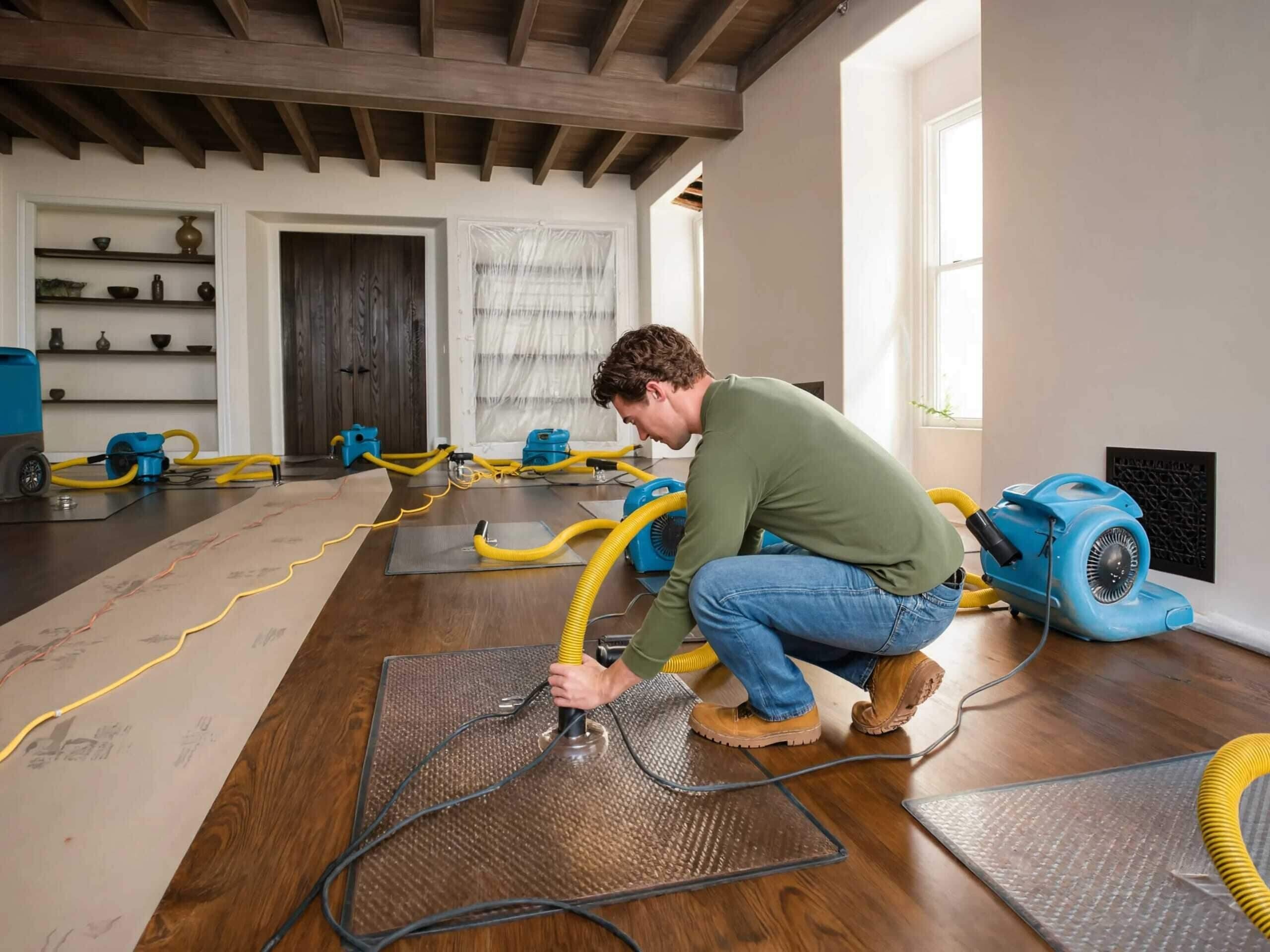
Structural Drying & Dehumidification in Houston, TX
A floor that feels dry can still be soaked inside the walls and subfloor. Our IICRC-certified Houston crew moisture-maps the whole structure and dries it to a measured S500 standard with commercial dehumidifiers — not just until it feels dry.
Call Now to Prevent Further Damage
Call Now(346) 210-6101
24/7 Emergency Response
Certified & Accredited in Houston


What You Get When You Call Houston Water Damage Restoration Pros
Real Houston crews, not a call center. Most neighborhoods reached within hours.
Trained to manufacturer and insurer standards, documented from the first hour.
We work with your adjuster and handle the claim paperwork for you.
Mitigation and full restoration under one roof, no handoff gaps or delays.
Why Proper Drying Matters in Houston's Humidity
In a dry climate, a wet wall might air out on its own. In Houston, it won't. The outdoor air carries so much moisture for most of the year that opening windows or running box fans just trades one source of damp for another. Without dehumidification that actively pulls water out of the air, moisture sits in the drywall and framing — and at Houston's temperatures, mold can colonize damp materials in as little as 24 to 48 hours.
That's the gap between renting a fan and hiring a structural-drying crew. We don't move wet air around; we remove the water from it, create a drying gradient that pulls moisture out of the building materials, and verify with meters that the structure actually reaches dry. The goal isn't a surface that feels dry to your hand — it's a wall, floor, and subfloor that read dry on an instrument.
Moisture Mapping & Water Damage Monitoring
You can't dry what you can't find. Before any equipment goes in, we map exactly where the water went — including the wet you can't see behind walls and under floors — and we keep measuring until the readings prove it's gone.
Thermal Imaging
Infrared cameras reveal cool, wet zones inside walls and ceilings that look perfectly dry on the surface.
Moisture Meters
Pin and pinless meters give a number for every wet material, so the dry target is measured, not guessed.
Humidity & Grain Tracking
We log temperature and grains-per-pound of moisture in the air daily to confirm the dehumidifiers are winning.
Daily Moisture Logs
Every reading is recorded and dated — a paper trail that proves the structure dried and backs your claim.
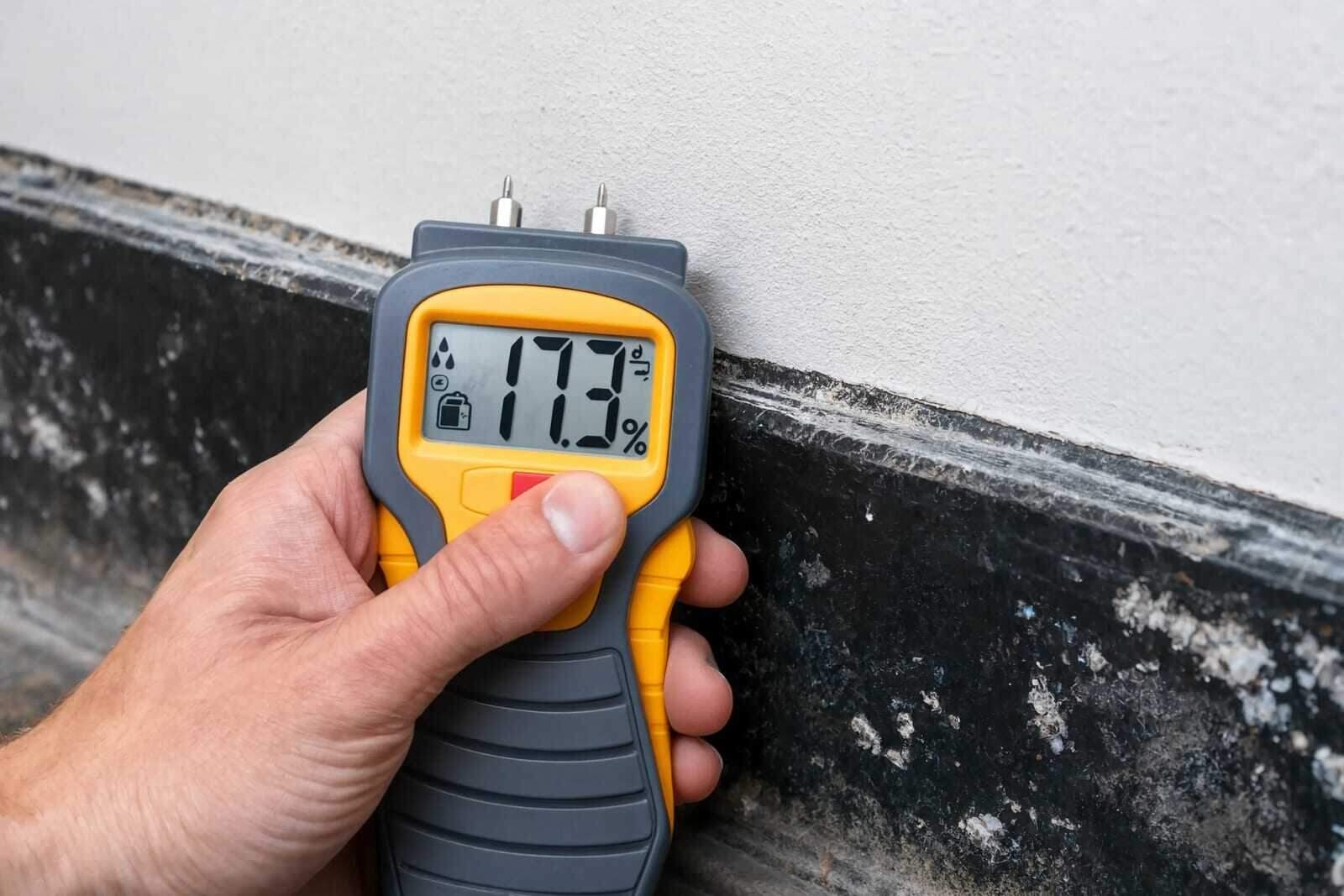
Our Drying Equipment & Methods
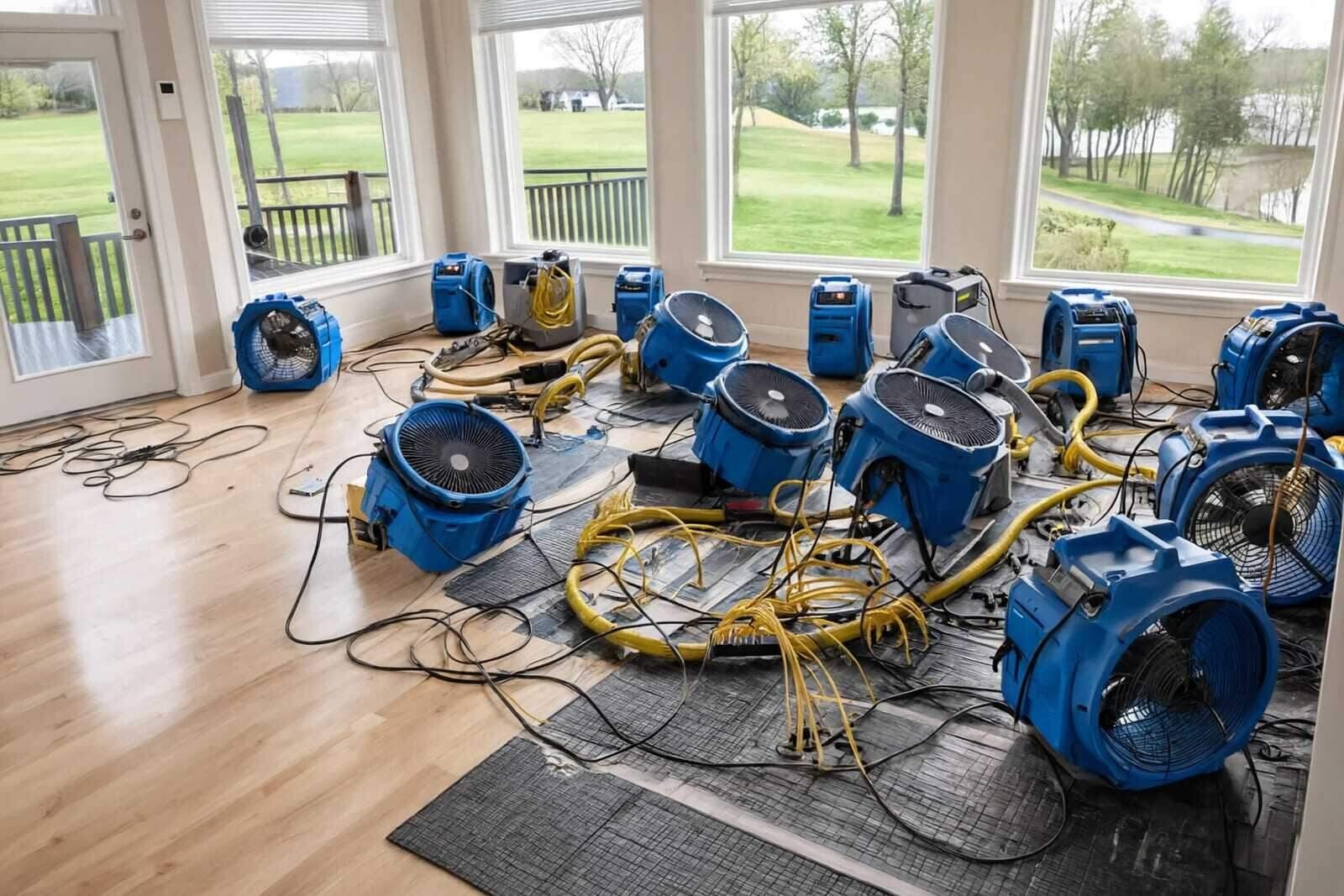
Drying a structure fast comes down to matching the right machine to the job and placing it where the moisture map says it's needed. Here's the equipment our Houston crews run.
- Low-grain refrigerant (LGR) dehumidifiers. The workhorse for Houston. LGR units pull water out of the air even when humidity is already high, where a standard dehumidifier would stall — they're what makes drying possible in this climate.
- Commercial air movers. High-velocity fans positioned to sweep air across wet surfaces, speeding evaporation so the dehumidifiers have moisture to capture. Placement angle matters as much as the count.
- Desiccant dehumidifiers. For large losses or very dense materials, desiccant units drive humidity lower than refrigerant units can, pulling moisture out of hardwood, plaster, and concrete.
- Floor and wall drying systems. Sealed mats and injection systems dry hardwood and wall cavities from the inside, so we can often dry in place instead of tearing out.
- Air scrubbers with HEPA filtration. Run alongside drying to capture airborne particles and keep indoor air quality up while the equipment runs.
How a Structural Drying Job Runs
Structural drying is a measured process from start to finish — set up to the map, monitor daily, adjust, and verify dry before pulling out. This is how our Houston crew runs it.
Map the Moisture
Thermal imaging and meters chart every wet material and set a measured dry goal for each.
Set the Drying System
Air movers and LGR dehumidifiers are sized and placed to the map, not dropped in by guess.
Monitor Daily
We return each day to log moisture, humidity, and grain readings and track the drying curve.
Adjust as It Dries
Equipment gets moved or added as materials release water, keeping the structure on schedule.
Verify & Document
We pull equipment only when readings hit the S500 dry standard, then hand over the full log.
Structural drying usually follows a water removal pass that takes out the standing water first. If the moisture map turns up an area that sat wet too long, our mold removal team steps in before drying closes out. Not sure whether your home is actually dry? Get in touch and we'll come measure it.
Frequently Asked Questions
How do you know when a structure is fully dry?
By the numbers, not by feel. We set a dry standard for each material based on a reading from an unaffected area of the same home, then meter the wet materials every day until they hit that target. A wall can feel dry to your hand while it's still holding moisture an inch deep, which is exactly the moisture that grows mold. We don't pull the equipment until the meters confirm every mapped area has reached its dry goal under the IICRC S500 standard, and you get the readings to prove it.
Why is professional drying better than fans alone — especially in Houston's humidity?
Box fans move air; they don't remove water from it. In Houston, the outdoor air is usually so humid that fans just push damp air around the room without ever drying the materials — and they can actually spread moisture and spores. Professional drying pairs air movers with low-grain dehumidifiers that pull the water out of the air, creating a gradient that draws moisture out of the walls and floor. That's the only way to dry a structure reliably here, and it's why a wall that fans "dried" often grows mold weeks later.
How long does structural drying take?
Most Houston homes dry in three to five days, though it depends on how much water there was, which materials got wet, and the indoor conditions. Drywall and carpet dry faster; hardwood, plaster, and concrete take longer. We give you a realistic estimate once we've mapped the moisture, and the daily readings tell us whether we're on track or need to add equipment. We'd rather run an extra day than pull out early and leave moisture behind.
Can the drying equipment stay while we live in the house?
Usually, yes. The equipment is loud and the air movers run continuously, but most families stay home through drying. We position units to keep walkways clear and explain which ones need to stay on. If a sewage backup or heavy mold is involved, we'll talk through whether part of the home should be sealed off. For a standard clean-water loss, you can typically keep living in the house while it dries.
Not Sure It's Really Dry? Let's Measure It.
Hidden moisture is what turns a water loss into a mold problem weeks later. Our Houston crew is on call 24/7 to moisture-map your home and dry it to a measured standard — call now and we'll head your way.
Call Now: (346) 210-6101