Sewage Cleanup & Backup Restoration in Houston, TX
Sewage backing up into your home is a biohazard, not just a mess, so keep your family clear of it. Our IICRC-certified, biohazard-trained Houston crew contains the contamination, removes it safely, and sanitizes everything it touched. Don't wait it out.
Call Now to Prevent Further Damage
Call Now(346) 210-6101
24/7 Emergency Response
Certified & Accredited in Houston


What You Get When You Call Houston Water Damage Restoration Pros
Real Houston crews, not a call center. Most neighborhoods reached within hours.
Trained to manufacturer and insurer standards, documented from the first hour.
We work with your adjuster and handle the claim paperwork for you.
Mitigation and full restoration under one roof, no handoff gaps or delays.
Why Sewage Backups Are a Health Hazard
A sewage backup is classified as Category 3 water, the most contaminated kind, carrying bacteria, viruses, and parasites that cause real illness on contact or by breathing the air around it. This is the line between a cleanup you can do with a mop and one that needs trained, protected technicians. Walking through it, touching soaked items, or running a household vacuum over it spreads the contamination instead of removing it. The safe move is to get people and pets out of the affected area and let a crew handle it in containment.
Pathogens spread on contact
Sewage carries E. coli, hepatitis, and other pathogens. Skin contact, contaminated surfaces, and airborne particles all pose a genuine exposure risk to your household.
Porous materials soak it up
Carpet, pad, drywall, and upholstery absorb contaminated water fast and hold it. Once saturated with Category 3 water, most of these can't be disinfected and have to go.
Houston humidity speeds mold
Sewage-soaked materials are an ideal mold base, and Houston's humidity gives mold a colony within a day or two if the area isn't extracted and dried right away.
The odor signals live contamination
That sewage smell isn't just unpleasant — it means contaminated material is still present and active. It clears only after full removal and sanitizing, not after airing out.
Our Sewage Cleanup & Sanitizing Process
Category 3 cleanup follows the IICRC S500 protocol for contaminated water, and the whole job is built around containment: keeping the affected zone sealed off so nothing spreads to clean parts of your Houston home.
Contain the Area
We seal off the affected zone and set up containment before any cleanup so contamination stays put.
Extract the Sewage
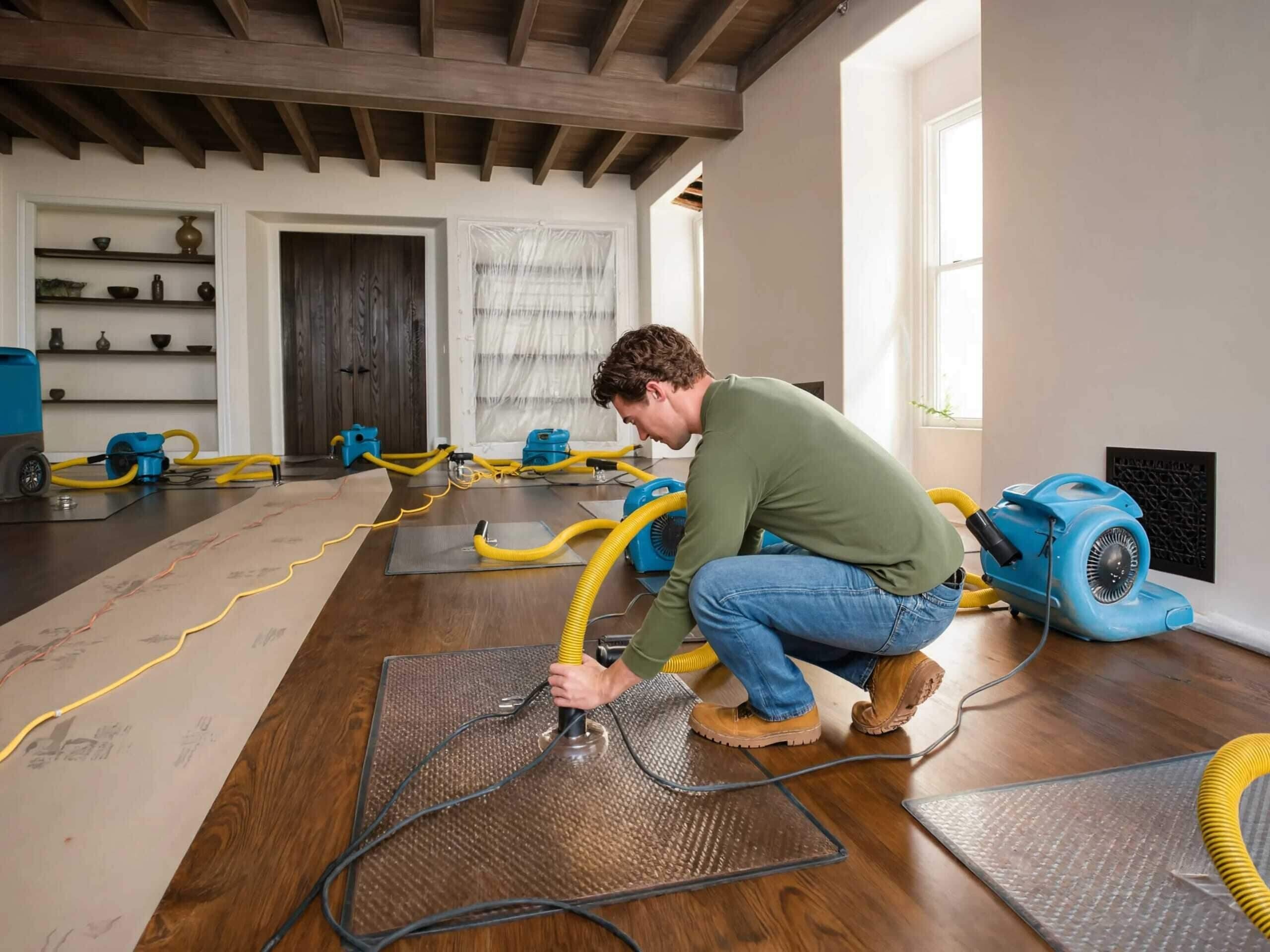
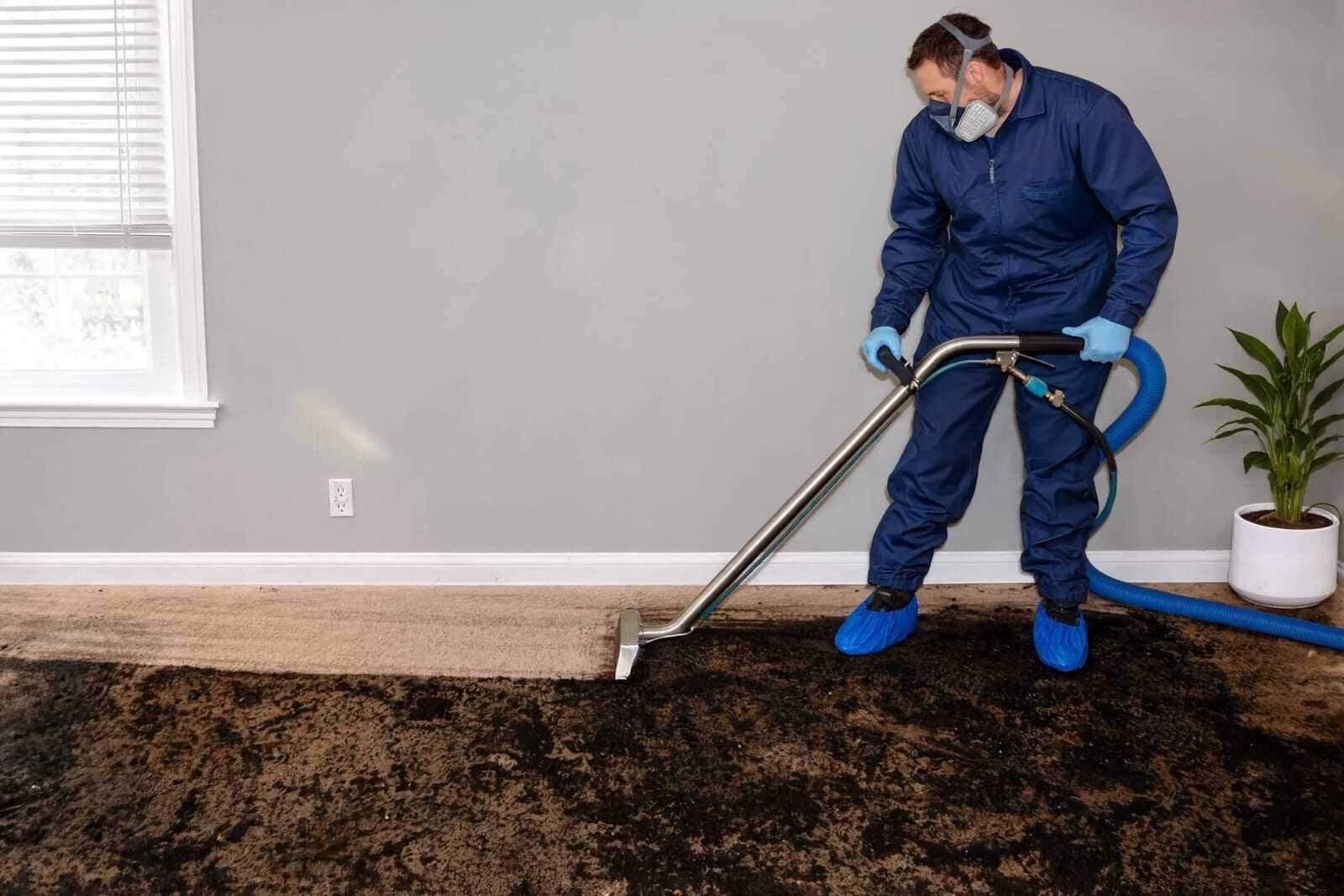
Crews in full PPE pump out the contaminated water with equipment dedicated to Category 3 work.
Remove & Bag Materials
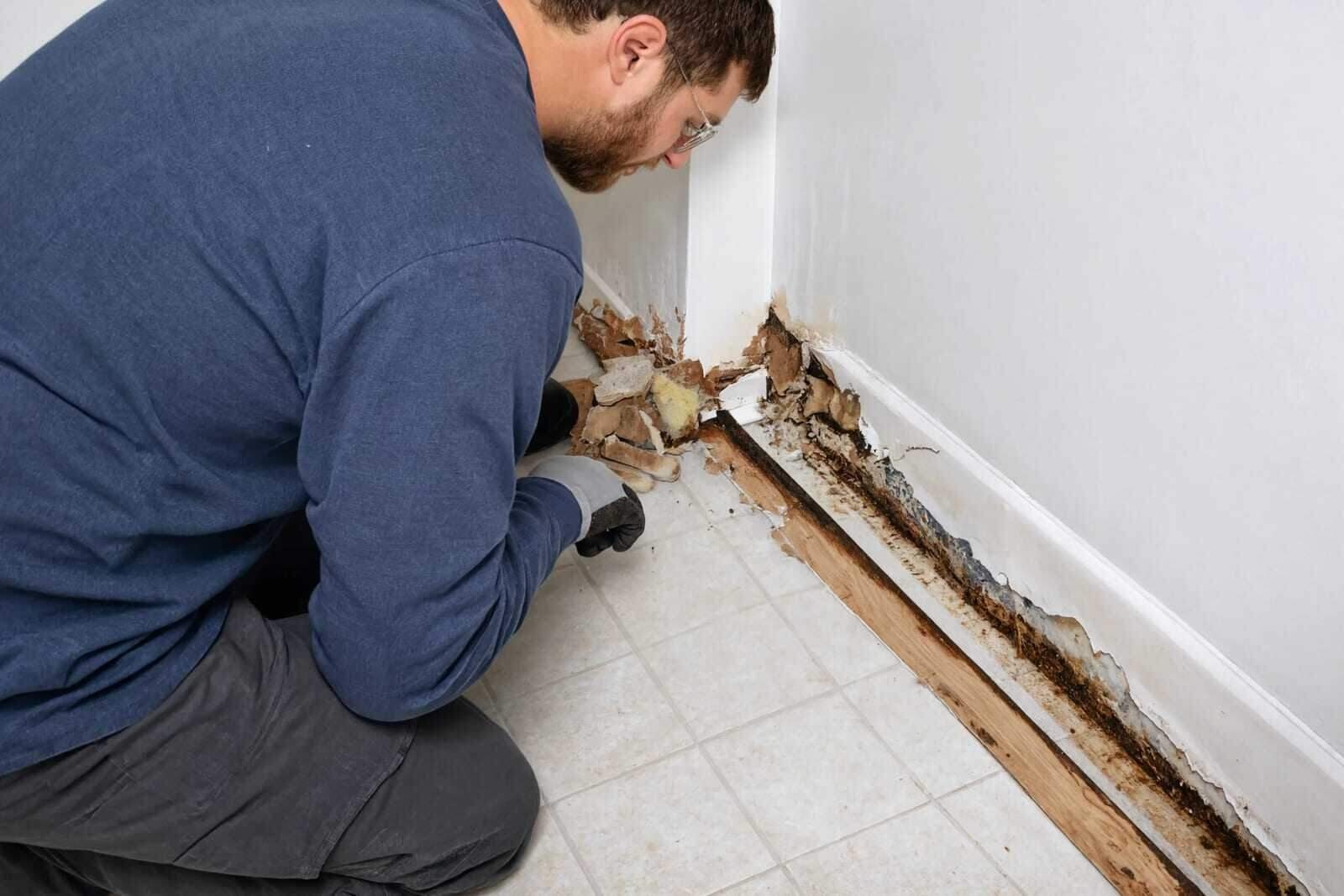
Saturated carpet, pad, drywall, and unsalvageable contents are cut out, bagged, and hauled for disposal.
Clean & Sanitize
Every affected surface is scrubbed and treated with EPA-registered antimicrobials to kill bacteria and viruses.
Deodorize & Dry
We neutralize odor at the source and run air movers and dehumidifiers until the structure reads dry.
Restore the Space
Once the area is clean and dry, we rebuild the drywall, flooring, and trim that came out.
Category 3 ("Black Water") Explained
Restoration crews grade water by how contaminated it is, and that grade decides what can be saved and what can't. Sewage is Category 3, the worst of the three.
- Category 1 — clean water. From a supply line or a fresh tank. Sanitary at the source, and most materials it touches can be dried and saved.
- Category 2 — gray water. From appliances like a washing machine or dishwasher. Some contamination, salvageable with prompt cleaning, but it degrades toward Category 3 if it sits.
- Category 3 — black water. Sewage backups, toilet overflow beyond the trap, and sewer-line failures. Grossly contaminated with pathogens, and porous materials it soaks have to be removed, not just cleaned.
The reason this matters on a sewage job: we're not trying to save every soaked item. Drywall, carpet pad, and similar porous materials that took on black water come out, because no surface cleaning makes them safe again. Sealed, non-porous surfaces can be sanitized and kept. Drawing that line correctly is the core of doing the job right, and it's why DIY cleanup so often leaves contamination behind.
Restoring Affected Areas After a Sewage Backup
Cleanup gets your home safe; restoration gets it back to normal. Once the contamination is gone and the structure is dry, we put the space back together.
Drywall & Trim Rebuild
We replace the baseboard, drywall, and trim removed during cleanup and finish it to match the room.
Flooring Replacement
Removed flooring and pad are replaced once the subfloor is sanitized, dry, and verified ready.
Odor Neutralized
We confirm the sewage odor is gone at the source so the finished space doesn't carry a lingering smell.
Documented for Insurance
Photos, readings, and scope are packaged for your adjuster from the first visit through final rebuild.
A sewage backup often signals a deeper problem, so tell us if the water came in alongside a pipe failure, and for heavy water we pair sanitizing with full water removal. Many homeowner's policies cover sudden backups; see how we handle water damage insurance claims, or contact us with the details of your situation.
Frequently Asked Questions
Is a sewage backup dangerous to my family?
Yes. Sewage is Category 3 water and carries bacteria, viruses, and parasites that can make people sick through skin contact, contaminated surfaces, or the air. Keep everyone — especially kids, elderly family, and pets — out of the affected area, don't touch soaked items, and don't run a household vacuum over it, which only spreads the contamination. The safe response is to stay clear and let a biohazard-trained crew handle it in containment.
Can affected carpet and drywall be saved after a sewage backup?
Usually not. Porous materials like carpet, pad, drywall, and upholstery soak up Category 3 water and hold the contamination where surface cleaning can't reach, so the safe and standard call is to remove and replace them. Sealed, non-porous surfaces like tile, sealed concrete, metal, and finished wood can be cleaned and sanitized and kept. We make that determination material by material, then document what came out for your claim.
How do you sanitize after a sewage backup?
After we extract the contaminated water and remove unsalvageable materials, every surface that stays gets scrubbed and treated with EPA-registered antimicrobials rated for Category 3 cleanup. We deodorize at the source rather than masking the smell, then dry the structure with air movers and dehumidifiers and confirm it reads dry before rebuilding. The whole process runs inside containment so nothing migrates to clean parts of the home.
Sewage in Your Home? Stay Out of It and Call Us.
Category 3 water is a health hazard that gets worse and spreads mold by the hour in Houston's climate. Our biohazard-trained crew is on call 24/7 — call now and keep your family clear until we arrive.
Call Now: (346) 210-6101