
Hardwood Floor Water Damage Repair in Houston, TX
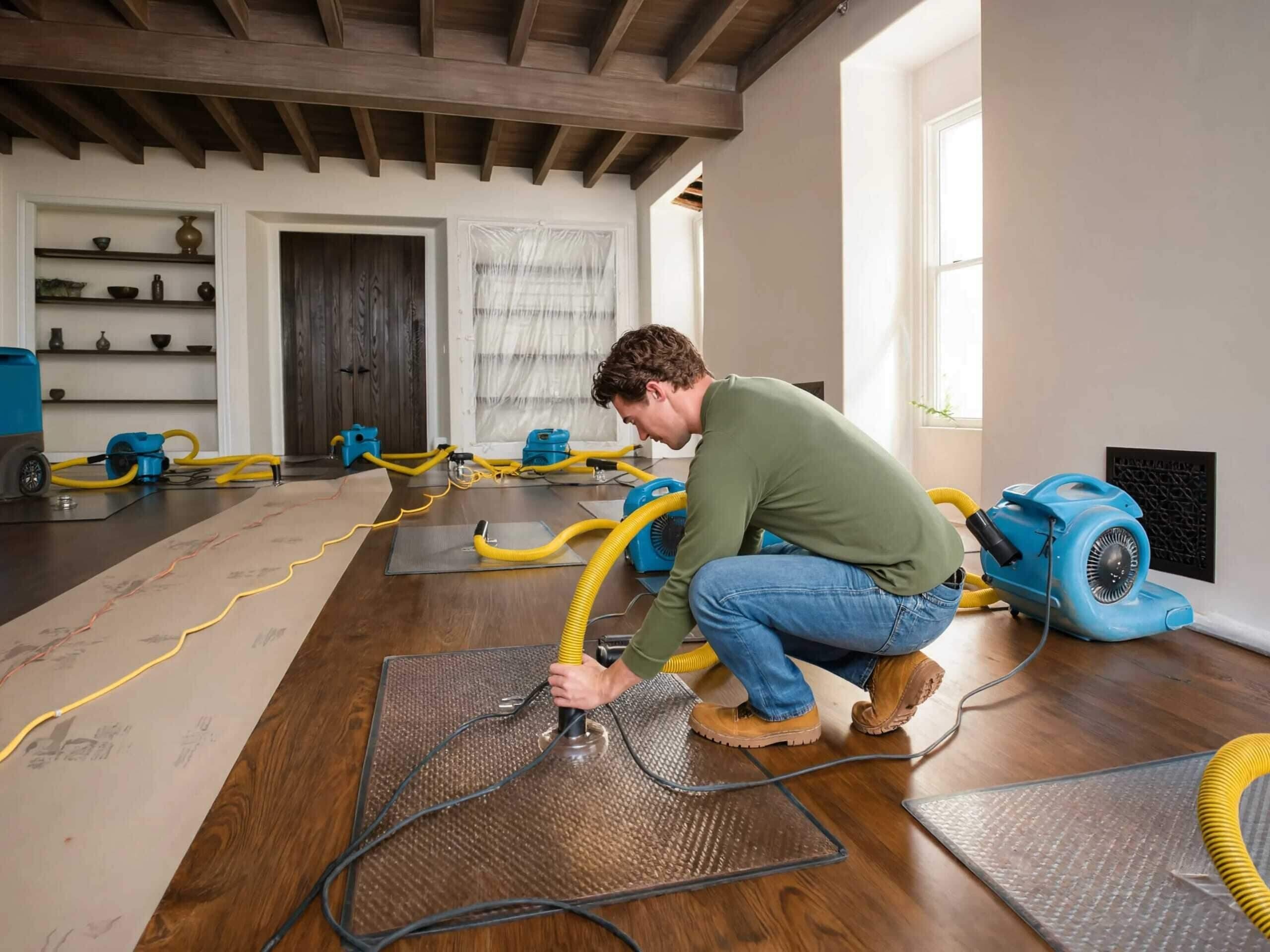
Wood floors cup and buckle within hours of a leak — but caught early, many can be dried flat instead of torn out. Our IICRC-certified Houston crew brings specialized floor-drying mats to pull moisture from the planks and subfloor.
Call Now to Prevent Further Damage
Call Now(346) 210-6101
24/7 Emergency Response
Certified & Accredited in Houston


What You Get When You Call Houston Water Damage Restoration Pros
Real Houston crews, not a call center. Most neighborhoods reached within hours.
Trained to manufacturer and insurer standards, documented from the first hour.
We work with your adjuster and handle the claim paperwork for you.
Mitigation and full restoration under one roof, no handoff gaps or delays.
Cupping, Buckling & Warping Explained
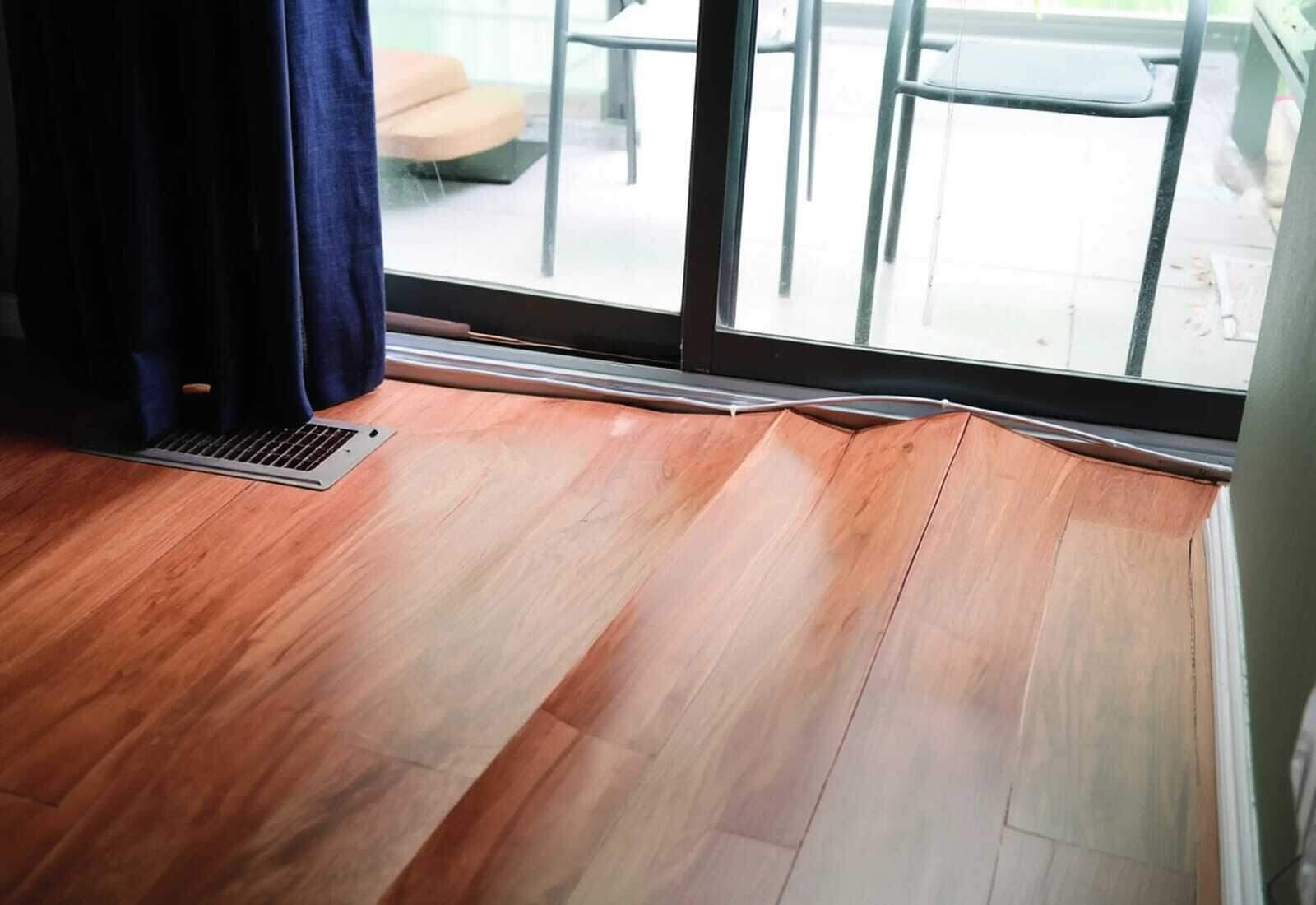
Wood swells when it absorbs water, and how it swells tells us how bad the damage is and whether the floor can be saved. The deformation you see is the wood reacting to moisture it pulled in from below — usually faster than the surface ever felt wet. These are the three patterns we read on arrival.
- Cupping. The edges of each board rise higher than the center, giving the floor a washboard feel. It happens when the underside of the plank is wetter than the top — the most common pattern, and the most recoverable if we dry it fast.
- Crowning. The center of the board sits higher than the edges. This often shows up later, after a cupped floor was sanded too soon or dried unevenly, which is why drying order matters.
- Buckling. Planks lift completely off the subfloor, sometimes by inches. Buckling means the floor took on a lot of water and the wood has pulled free of its fasteners — the hardest case to save, but not always a write-off.
- Gaps and splits. After the swelling recedes, boards can shrink unevenly and leave gaps or cracked finish. We account for this in the drying plan so the floor settles flat, not gapped.
Can Your Houston Hardwood Floors Be Saved?
Often, yes — if we get to it before the wood dries in its swollen shape. The single biggest factor is time. A floor that's dried within the first day or two usually flattens back out; one that's sat cupped for a week has set and is far more likely to need replacing. Here's what we weigh when we meter your floor.
How long it sat wet
Caught in the first 24 to 48 hours, most cupped floors dry flat. After several days the wood sets in its swollen shape and the odds of a full save drop sharply.
Solid vs. engineered
Solid hardwood is thicker and forgives more drying. Engineered planks have a thin veneer over a core that can delaminate, so they're more sensitive to prolonged water.
How clean the water was
A clean supply-line leak is the best case. Floors soaked by a sewage backup are contaminated and usually replaced regardless of how they look.
The subfloor underneath
Even when the planks recover, a soaked plywood or particleboard subfloor has to dry or come out. We meter below the surface, not just the wood you can see.
We meter the floor and the subfloor before we tell you anything, and we'll give you a straight answer: dry-in-place or replace. When the planks can't be saved, fast drying still protects the subfloor and framing so the replacement goes in over a dry, sound base.
Our Specialized Floor Drying Process
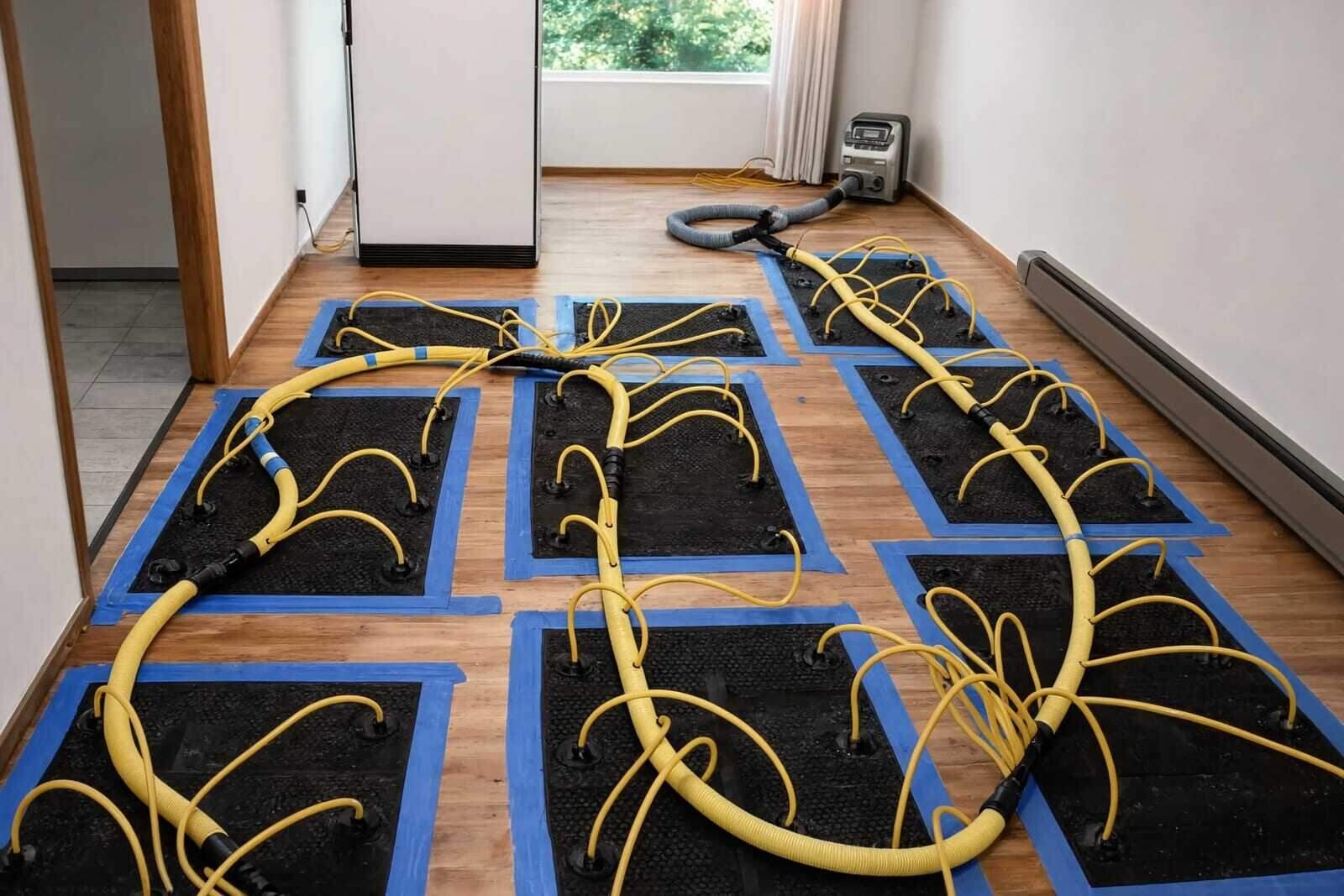
Drying a wood floor isn't the same as drying a room. Pointing fans at the surface dries the top while the underside stays wet, which locks the cup in. We pull moisture from under the boards using floor-drying mats and a sealed system, the method the IICRC S500 standard calls for on hardwood.
Extract Surface Water
We pull standing water off the floor and out of any adjacent carpet or pad before drying starts.
Map Moisture in the Wood
Pin and pinless meters read the planks and subfloor so we know the wet zone and a real dry target.
Set Floor-Drying Mats
Sealed mats laid over the boards draw moisture up from below — the only way to dry a plank evenly.
Dehumidify the Room
Low-grain refrigerant dehumidifiers hold the room dry so the wood releases water instead of reabsorbing it.
Monitor Until Flat
We log readings daily and pull equipment only when the wood reaches its dry standard and the cup relaxes.
This overlaps with our broader structural drying work. The subfloor, walls, and baseboards in the same room get dried on the same visit, and every reading is logged for your insurance claim. Caught your floor cupping today? Reach out now, because the first day is when it's most savable.
Frequently Asked Questions
Can water-damaged hardwood floors be dried instead of replaced?
Often, yes — especially if we start within the first day or two. Using floor-drying mats that pull moisture up from under the boards, plus dehumidification to hold the room dry, a cupped floor frequently flattens back to usable. The deciding factors are how long it sat wet, whether the wood is solid or engineered, and how clean the water was. We meter the planks and subfloor and give you an honest call rather than defaulting to a tear-out — replacing a floor that could have been dried is an expensive mistake.
How long does it take to dry hardwood flooring after a leak?
Hardwood is one of the slower materials to dry — typically five to ten days on floor-drying mats and dehumidifiers, sometimes longer for solid wood or a heavily soaked subfloor. It takes longer than drywall or carpet because water has to be pulled through the full thickness of the plank without cracking the finish. Houston's humidity adds to it, which is exactly why we use a sealed, mat-based system instead of open fans. We monitor moisture daily and don't pull equipment until the wood reads dry.
My floor is cupped — should I wait to see if it flattens on its own?
No — waiting is what turns a savable floor into a replacement. A cupped floor left to dry on its own dries unevenly and slowly in Houston's humidity, and the wood sets in its swollen shape. It can also crown if it's later sanded flat too soon. The faster we get drying mats under the boards, the better the odds the floor relaxes flat. If it's been cupped more than a few days, call anyway — we can still often save the subfloor and limit the damage even when some planks have to go.
Will my insurance cover hardwood floor water damage?
If the water came from a sudden, accidental event — a burst supply line, an overflowing dishwasher, an upstairs leak — most homeowner policies cover the floor and the drying work. Gradual leaks that went unaddressed are often excluded. Coverage depends on your policy and the cause. We document the source and meter the floor before and after drying, so your adjuster sees both the damage and the fact that drying-in-place was the cost-effective choice where it applied.
Wood Floor Cupping? The Clock Is the Enemy.
Every day a hardwood floor sits wet, the odds of drying it flat drop and the odds of a tear-out climb. Our Houston crew is on call 24/7 with the mats and dehumidifiers to save it — call now and we'll head your way.
Call Now: (346) 210-6101